Signs of an AC Electrical Problem
- The outdoor unit hums or clicks but doesn't start
- The outdoor fan won't spin, or only spins if you nudge it
- The system won't turn on at all
- The breaker trips when the AC starts
- The AC turns on and off rapidly
- A burning smell or visible scorch marks near the unit
AC Capacitor Replacement
The capacitor stores energy to start the compressor and fan motor. Heat is hard on capacitors, so they're one of the most common parts to fail in Florida. A weak capacitor can also strain the compressor and motors before it fails completely.
We test the capacitor with a meter rather than guessing by looks, and replace it with the correct rating for your system. A customer in Kissimmee summed it up in their review: Rivero A/C "changed the faulty capacitor, and had the house cool again in no time."
Contactor Repair and Replacement
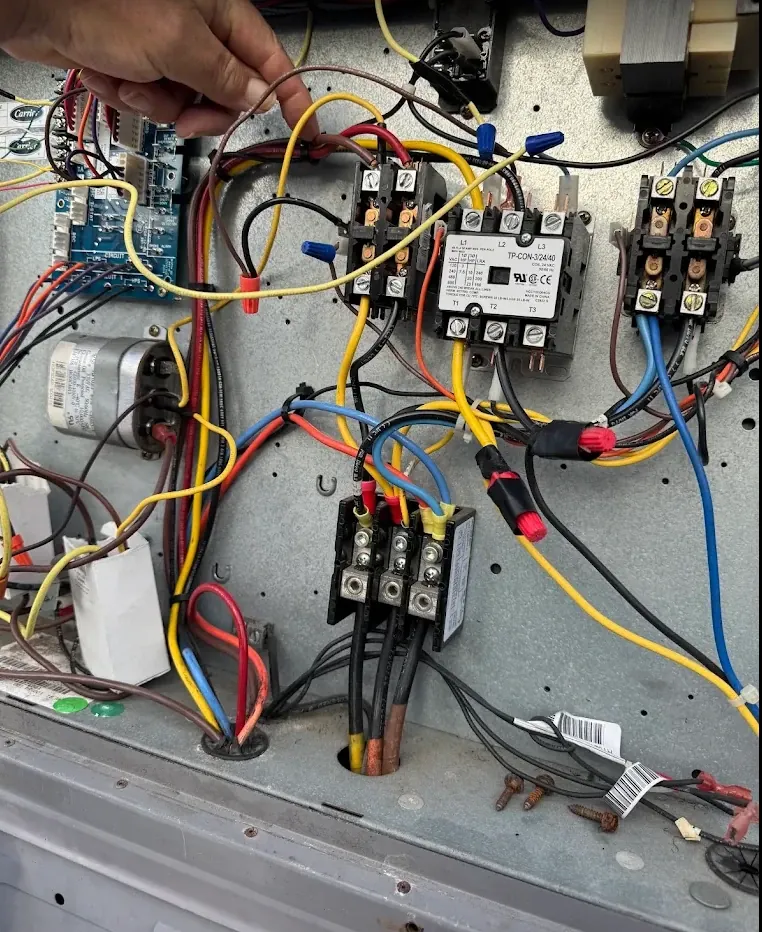
The contactor is the switch that sends power to the outdoor unit when the thermostat calls for cooling. Over time its contacts pit and burn, or insects get inside. A failed contactor can keep the outdoor unit from starting or keep it running when it should be off.
Wiring, Shorts and Tripping Breakers
Loose connections, rodent damage and corroded terminals can cause intermittent failures and tripped breakers. We trace the circuit to find the actual fault. One customer in Davenport noted that we "took the time to trace a small electrical short instead of telling us we needed a new system." That's how we approach every electrical call.
Safety First
If you smell burning, see scorch marks, or the breaker trips more than once, turn the system off and leave it off. Air conditioners use high voltage and capacitors can hold a charge even with the power off, so this is a job for a licensed technician. If the house is getting dangerously hot, see emergency AC repair.
Control Boards and Low-Voltage Wiring
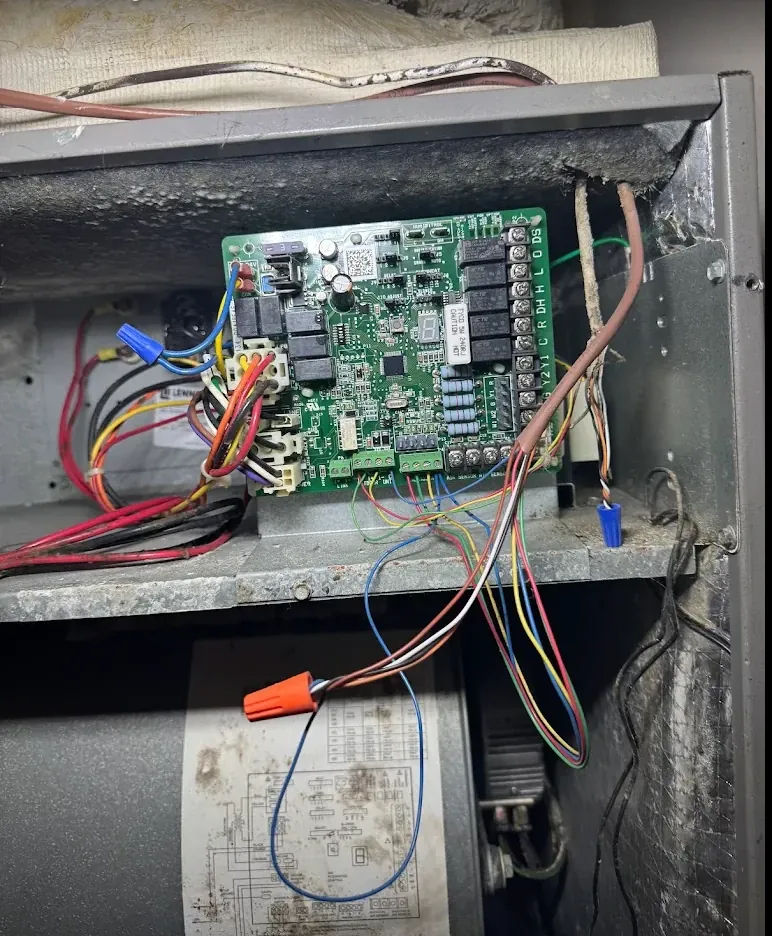
Inside the indoor air handler is a control board that takes the signal from your thermostat and turns the blower, the outdoor unit and the heat on and off. The thin low-voltage wires between the thermostat, the board and the outdoor unit are easy to damage: a nicked wire in the attic, a loose wire nut or a corroded terminal can make the system act like it's completely dead.
When the system won't respond at all, we test from the thermostat to the board to the outdoor unit until we find where the signal stops. Often the fix is a connection, not a new board. A Kissimmee customer described one of those calls: "Alfredo is the best! Very detailed and explains everything clearly. He fixed our thermostat connection and did a full diagnostic. Will definitely use them again." (Maria S., Kissimmee, FL)
Lightning, Surges and Florida Storms
Central Florida gets more lightning than almost anywhere in the country, and summer storms roll through most afternoons. Power surges and brownouts can burn out control boards, capacitors and contactors, and sometimes the damage only shows up days later when the AC won't start.
If your AC stopped working right after a storm or a power outage, check the breakers and the outdoor disconnect first. If everything is on and the system still won't run, call us. We'll test the components and tell you what was damaged.
How We Test an Electrical Problem
Testing each part is how we avoid replacing parts that aren't broken, and it's why you get a firm price before we start.
- Check the voltage coming into the indoor and outdoor units
- Test the capacitor against its rated value with a meter
- Inspect the contactor for pitting, burning or insects
- Measure the current each motor and the compressor draws
- Check wiring, terminals and connections for heat damage, corrosion or rodent damage
- Confirm the thermostat and control board are sending the right signals
Related Repairs and Service Area
Electrical problems often show up alongside fan motor and thermostat issues, so we check those too. We handle electrical repairs throughout Kissimmee and nearby Celebration, Orlando and Haines City. See all AC repair services.
We Also Serve These Areas
Frequently Asked Questions
How do I know if my AC capacitor is bad?
Common signs are a humming outdoor unit that won't start, a fan that doesn't spin, or warm air from the vents. A technician confirms it by testing the capacitor with a meter.
Can I replace an AC capacitor myself?
We don't recommend it. Capacitors can hold a dangerous charge even when the power is off, and the replacement has to match your system's rating.
Why does my AC keep tripping the breaker?
It can be a failing capacitor, a motor or compressor drawing too much current, a short in the wiring or a bad breaker. Leave it off after the second trip and call us.
Why does my outdoor unit hum but not start?
The most common cause is a failed capacitor. It can also be a stuck contactor, a seized fan motor or a compressor problem. Turn it off and call us. Letting it hum for a long time can damage the motor or compressor.
Can lightning or a power surge damage my AC?
Yes. Surges can burn out control boards, capacitors and contactors. If your AC stopped after a storm and the breakers are on, have it tested.
What does an AC contactor do?
It's the switch that sends power to the outdoor unit when the thermostat calls for cooling. When its contacts burn or pit, the outdoor unit may not start, or may keep running when it should be off.
Is a burning smell from my AC dangerous?
It can be. Turn the system off at the thermostat and the breaker, leave it off and call us. Don't turn it back on until it's been checked.
Can you replace a capacitor the same day?
Usually, yes. We carry common capacitor sizes on the truck, and we match the replacement to your system's rating.